
What is an emergency fund? It’s cash set aside specifically to cover essential expenses if something unexpected happens — a job loss, a medical bill, a major car repair — without forcing you into debt or selling investments at a bad time. Despite how often it’s recommended, most Americans don’t have one built yet.
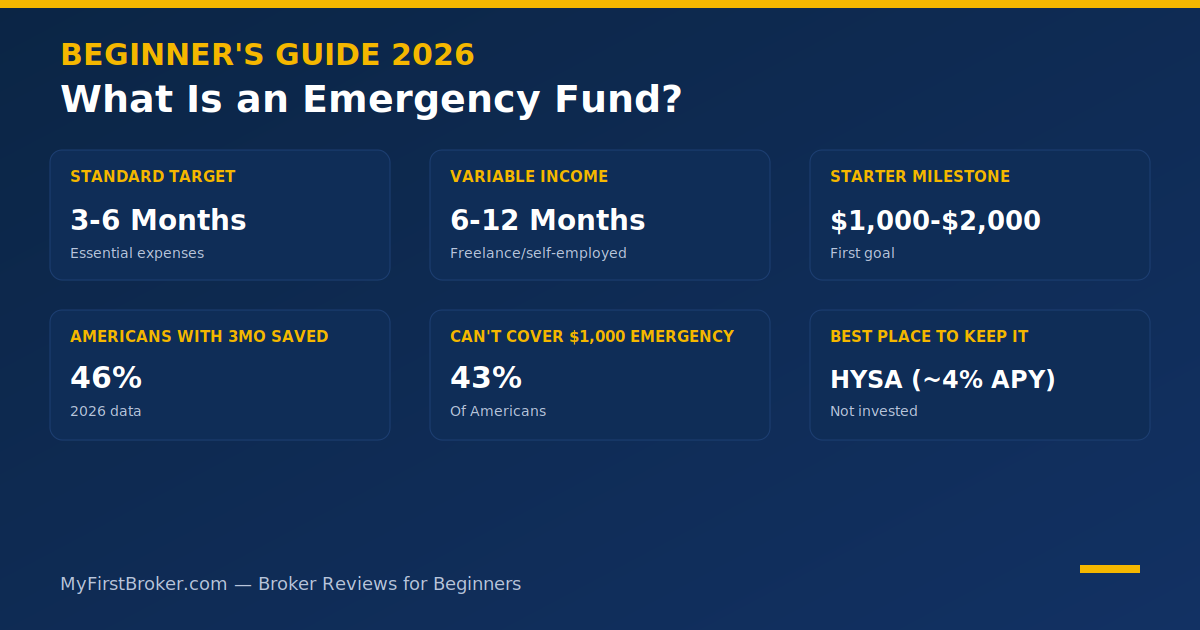
An emergency fund is 3-6 months of essential living expenses kept in cash, ideally in a high-yield savings account rather than invested in the market. If your income is variable — freelance, commission-based, or self-employed — experts recommend 6-12 months instead. A common first milestone is $1,000-$2,000, which covers most common surprises while you work toward the full target.
What Is an Emergency Fund? How Much You Actually Need
Standard recommendation: 3-6 months of essential expenses
Variable income or self-employed: 6-12 months recommended
Starter milestone: $1,000-$2,000 before tackling high-interest debt
Where to keep it: A high-yield savings account (HYSA), paying around 4.00-4.20% APY in 2026
What Counts as an “Essential” Expense?
Your emergency fund target should be based on essential expenses only — housing, utilities, groceries, transportation, insurance, minimum debt payments — not your total monthly spending. Dining out, subscriptions, and entertainment are things you’d cut immediately in a real emergency, so they shouldn’t inflate your target number.
Why Not Just Invest It Instead?
Emergency funds are kept in cash specifically because they need to be accessible and stable — the exact opposite of what makes investing valuable over time. If your emergency fund were invested and the market dropped right when you needed the money, you could be forced to sell at a loss during the worst possible moment. The stability trade-off is the entire point.
How to Start Building One
- Set a starter goal of $1,000, separate from your checking account.
- Open a high-yield savings account so your cash at least earns some interest while it sits.
- Automate a fixed transfer each payday, even if it’s small.
- Gradually build toward 3-6 months of essential expenses (or 6-12 months if your income is variable).
Common Mistakes to Avoid
One common mistake is keeping emergency savings mixed in with everyday checking, where it’s too easy to spend accidentally. Another is investing the fund in stocks to “make it grow faster” — defeating the purpose, since what is an emergency fund really about is stability and availability, not market timing. A third is waiting to start until you can commit to the full 3-6 month target, when starting with even $25 a week builds real momentum toward the goal.
Frequently Asked Questions
How much money should be in an emergency fund?
Most experts recommend 3-6 months of essential expenses, with 6-12 months for those with variable income, no dependents’ second income, or higher job instability.
Should I build an emergency fund before investing?
Many financial educators recommend at least a starter fund of $1,000-$2,000 before investing significant amounts, so an unexpected expense doesn’t force you to sell investments early.
Where should I keep my emergency fund?
A high-yield savings account is the most common recommendation — it keeps your money liquid, safe, and earning some interest, unlike a standard checking account.
Is this emergency fund guide up to date?
Yes — this emergency fund guide is reviewed regularly and reflects current savings data and recommendations as of 2026.
Ready to start investing once your fund is in place? See our guide on how much beginners should invest and our Best Online Brokers for Beginners roundup, or read the CFPB’s official guide to building savings.
Once you understand what is an emergency fund and why it matters, building one becomes less about willpower and more about consistency.