
Looking for an honest Fidelity review before you open an account? If you’re a beginner investor researching Fidelity Investments, you’ve probably noticed the same three claims everywhere: no fees, no minimums, great tools. All of that is true — but it’s not the full picture. This review breaks down exactly what Fidelity charges, who it’s actually built for, and where it falls short, so you can decide if it’s the right home for your money.
Fidelity is one of the strongest all-around choices for beginners in 2026: $0 account minimums, $0 commissions on stocks and ETFs, fractional shares from $1, and genuinely useful educational tools. The main trade-offs are a $49.95 fee on non-Fidelity mutual funds and a steeper learning curve if you only want a simple app experience.
Open a Fidelity Account →
Opening an account is free. MyFirstBroker may earn a commission if you sign up through this link.
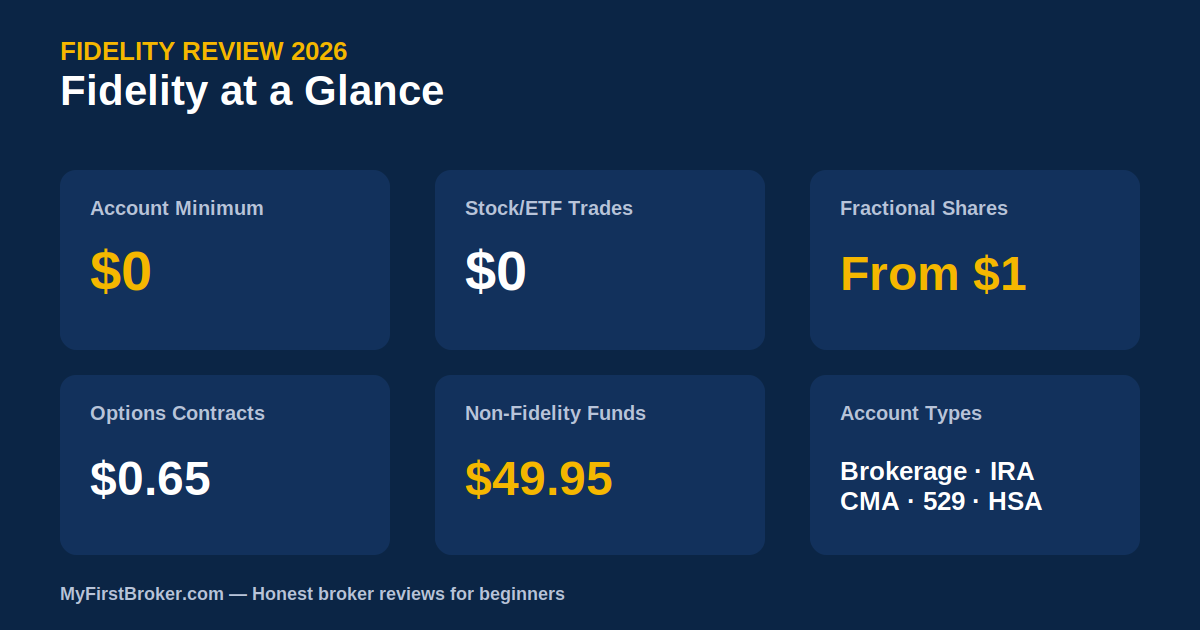
Fidelity at a Glance
- Account Minimum$0
- Stock/ETF Trades$0 commission
- Options Contracts$0.65 per contract
- Fractional Shares✓ Yes, from $1
- Account TypesBrokerage, Roth & Traditional IRA, Cash Management, 529, HSA, Custodial
- Non-Fidelity Mutual Fund Fee$49.95 per transaction
- Broker-Assisted Trade Fee$32.95
Fidelity Review: How Much Does It Actually Cost?
Fidelity’s headline pricing is simple: online U.S. stock and ETF trades cost $0 in commissions, and there’s no account minimum or annual maintenance fee on standard brokerage accounts, Roth IRAs, Traditional IRAs, or the Cash Management Account. You can open an account with $0 and keep it funded with whatever amount you’re comfortable with.
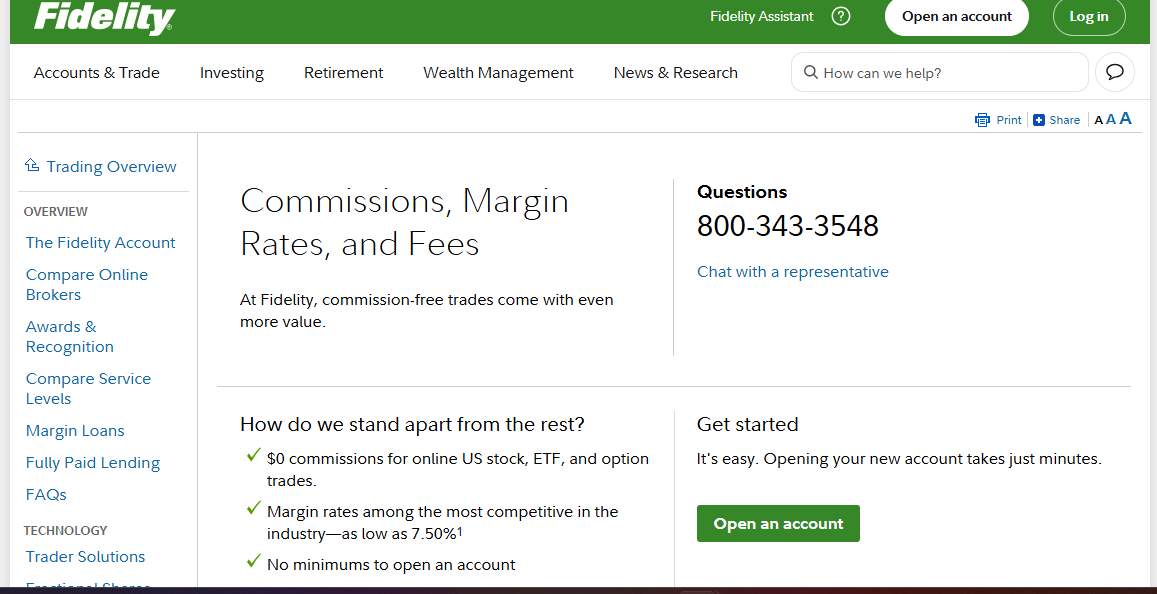
Screenshot from Fidelity’s official pricing page, verified September 2026.
Where costs can sneak in:
- Non-NTF mutual funds: If you buy a mutual fund that isn’t on Fidelity’s no-transaction-fee list, you’ll pay $49.95 per purchase. This is higher than some competitors, so check the fund’s status before buying.
- Options contracts: $0.65 per contract, which is standard across the industry.
- Broker-assisted trades: Calling a representative to place a trade for you costs $32.95. Placing the same trade yourself online is free.
- Fidelity Go (robo-advisor): Free for balances under $25,000. Above that, it’s 0.35% per year.
Account Types Available
This is one of Fidelity’s biggest advantages over simpler apps like Robinhood — the range of account types covers nearly every situation:
- Brokerage Account: The standard taxable account for general investing.
- Roth & Traditional IRA: Both available with $0 minimums, useful for retirement savings.
- Cash Management Account: Built for everyday spending, pairs with your brokerage account.
- 529 College Savings Plan: For education savings.
- HSA: Health savings account with investment options.
- Custodial Accounts: For parents investing on behalf of a minor.
Pros and Cons
✓ Pros
- No account minimums or annual fees
- $0 commissions on stocks and ETFs
- Fractional shares from $1
- Strong educational resources for beginners
- 24/7 phone and in-person branch support
- Zero-expense-ratio proprietary index funds (ZERO funds)
✗ Cons
- $49.95 fee on non-Fidelity mutual funds
- Interface has more depth than beginners may need at first
- ZERO funds can’t be transferred to other brokerages (must sell first)
- Crypto trading requires a separate account
- Not available to investors residing outside the U.S.
Who Is Fidelity Best For?
Fidelity is a strong fit if you want a single platform that can grow with you — from your first $50 brokerage deposit to a full retirement and wealth-planning setup years later. It’s particularly well suited for beginners who value having access to real customer support (phone or in-person) and want low-cost index fund options without needing to research fund fees constantly.
How Does Fidelity Compare to Other Brokers?
Curious how Fidelity stacks up against other options? See our head-to-head comparisons: Fidelity vs Robinhood, Fidelity vs Schwab, Fidelity vs Vanguard, Fidelity vs SoFi, and Fidelity vs Acorns.
If you want the absolute simplest possible app with nothing else to learn, Robinhood may feel more approachable at first. But for most beginners planning to stick with investing long-term, Fidelity’s combination of low costs and account flexibility is hard to beat.
How to Open a Fidelity Account
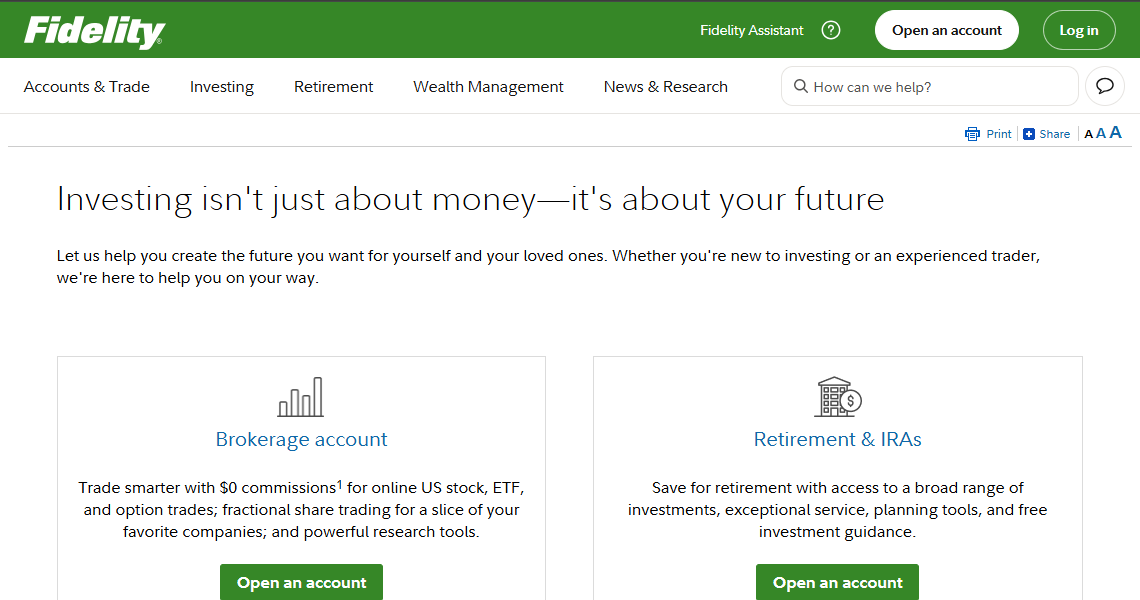
Fidelity’s account opening page, verified September 2026.
- Go to Fidelity’s website and select “Open an Account.”
- Choose your account type — a standard brokerage account or Roth IRA are the most common starting points for beginners.
- Enter your personal information — name, address, Social Security number, and employment details.
- Link your bank account via ACH transfer to fund it.
- Make your first investment — many beginners start with a broad-market ETF or one of Fidelity’s ZERO index funds.
Frequently Asked Questions
Does Fidelity have a minimum deposit?
No. Standard brokerage accounts, Roth IRAs, Traditional IRAs, and the Cash Management Account all have a $0 minimum to open and maintain.
Is Fidelity good for beginners?
Yes. The combination of no fees, no minimums, fractional shares, and genuinely useful educational content makes it one of the more beginner-friendly full-service brokers available.
Does Fidelity charge account maintenance fees?
No. Standard retail accounts have no monthly or annual maintenance fee.
Can I trade crypto on Fidelity?
Yes, but it requires opening a separate crypto account distinct from your main brokerage account.
Is this Fidelity review up to date?
Yes. This Fidelity review reflects account fees, minimums, and features confirmed as of mid-2026. Fee schedules can change, so always confirm current details on Fidelity’s official pricing page before opening an account.
Want to see how Fidelity stacks up against other platforms? Check out our full comparison of the best online brokers for beginners in 2026.
For an unbiased overview of investor protections, see the SEC’s official guide to opening a brokerage account at Investor.gov.
Whichever account type you choose, this Fidelity review shows why it remains one of the most complete options for beginners in 2026.
Open a Fidelity Account →
Opening an account is free. MyFirstBroker may earn a commission if you sign up through this link.