
Robinhood vs Schwab is a matchup between two very different philosophies: a mobile-first app built for active traders versus a full-service brokerage built for long-term investors. Both charge $0 for stock and ETF trades, but the differences in options fees, mutual funds, and support make this a clearer choice than it first appears.
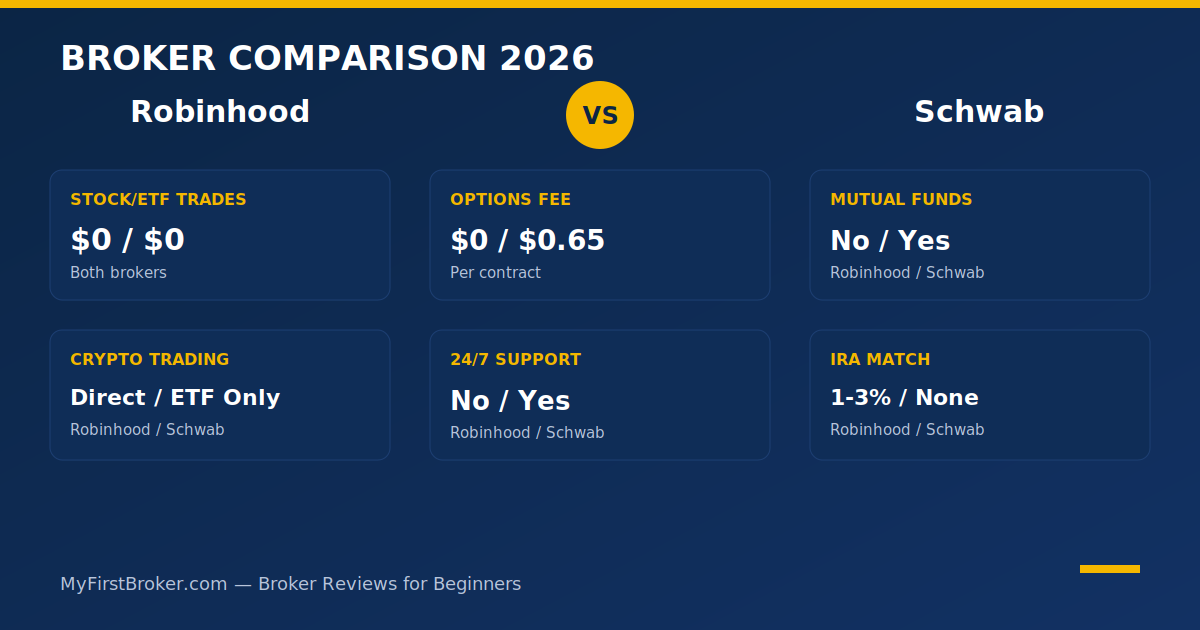
Both brokers charge $0 for stock and ETF trades. Robinhood is cheaper for options traders ($0 per contract vs Schwab’s $0.65) and offers direct crypto trading plus an IRA match through Robinhood Gold. Schwab wins for long-term investors who want mutual funds, 24/7 support, and 300+ physical branches. If you want a mobile-first app with crypto and cheaper options, Robinhood fits better. If you want full-service support and mutual fund access, Schwab is the stronger choice.
Robinhood vs Schwab at a Glance
Stock/ETF commissions: $0 at both brokers
Options fee: $0 per contract at Robinhood vs $0.65 at Schwab
Mutual funds: Not offered at Robinhood vs thousands available at Schwab
Crypto trading: Direct access at Robinhood vs ETF-only at Schwab
Customer support: Digital-only at Robinhood vs 24/7 and 300+ branches at Schwab
IRA match: 1% free (3% with Robinhood Gold) vs none at Schwab
Robinhood vs Schwab: Costs and Fees Breakdown
Both charge $0 for online stock and ETF trades. The clearest cost difference is options: Robinhood charges $0 per contract, while Schwab charges $0.65 — a real advantage for active options traders at Robinhood. On the other hand, Schwab offers access to thousands of mutual funds, something Robinhood doesn’t provide at all, which matters if a specific mutual fund is part of your strategy.
Where Robinhood Wins
Robinhood’s advantage is cost for active traders and access to crypto. Its $0 options fee beats Schwab outright for frequent options traders, and its direct cryptocurrency trading goes beyond what Schwab offers (Schwab only provides crypto exposure through ETFs). Robinhood Gold’s IRA match — 3% on contributions for $5/month — is also a distinctive perk not available at Schwab.
Where Schwab Wins
Schwab’s advantage is breadth and support. Its 24/7 customer service and 300+ physical branches give investors a place to get help beyond an app. Access to thousands of mutual funds and a more complete lineup of account types make Schwab the stronger choice for long-term, full-service investors. Still torn on Robinhood vs Schwab? If you’re an active options or crypto trader, Robinhood is cheaper; if you want full-service support and mutual funds, Schwab is built for that.
Robinhood Pros
- $0 options contract fee
- Direct cryptocurrency trading
- IRA match through Robinhood Gold
Robinhood Cons
- No mutual funds available
- Digital-only support, no branches
- $75 fee to transfer your account out
Schwab Pros
- Thousands of mutual funds available
- 24/7 customer service
- 300+ physical branches
Schwab Cons
- $0.65 per options contract
- Crypto only available via ETFs, not direct trading
Frequently Asked Questions
Is Robinhood or Schwab better for beginners?
It depends on your needs. Robinhood is simpler for beginners who want a mobile-first experience and possibly crypto access. Schwab is stronger for beginners who want full-service support and access to mutual funds.
Which is cheaper for options trading, Robinhood or Schwab?
Robinhood is cheaper, charging $0 per options contract compared to Schwab’s $0.65.
Can I buy mutual funds on Robinhood?
No. Robinhood does not offer mutual funds. Schwab offers thousands, including its own low-cost fund lineup.
Is this Robinhood vs Schwab comparison up to date?
Yes — this Robinhood vs Schwab comparison is reviewed regularly and reflects current fees and features as of 2026.
For more, read our full Robinhood review and Charles Schwab review, or see our Fidelity vs Schwab comparison for another look at Schwab’s strengths.
For an unbiased overview of investor protections, see the SEC’s official guide to opening a brokerage account at Investor.gov.